
Loading...
Serving Ashland, OH and surrounding areas. (567) 899-0137
Rigid batts leave gaps. Blown-in insulation fills every corner of your attic or wall cavity so heat stays where you need it - inside your home all winter long.
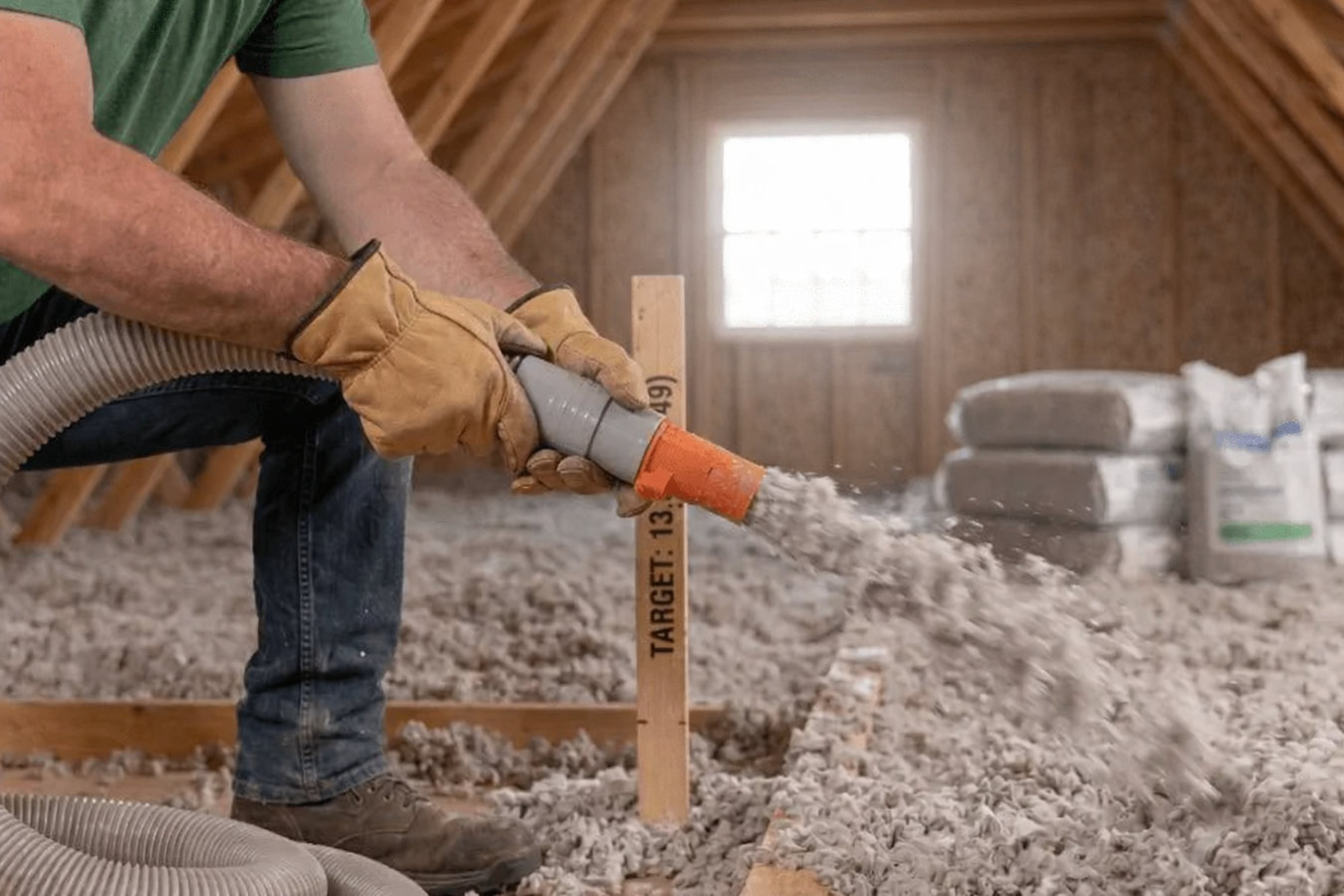
Blown in insulation in Ashland uses loose cellulose or fiberglass fiber blown through a hose to create a complete thermal barrier in your attic or walls - most attic jobs are finished in three to five hours and the results are noticeable by the next heating cycle.
If your Ashland home was built before 1985, the original insulation was installed under standards far lower than what is recommended today. That gap shows up every November when your furnace kicks on and your gas bill climbs. Blown-in material fills the thin spots, gaps near the eaves, and the irregular spaces that batt insulation simply cannot reach.
Many homeowners discover during the assessment that air sealing comes first. Pairing blown-in coverage with sealed gaps makes the whole system work far better. If your attic has been ignored for years, you may also want to consider our home insulation service, which looks at every area of your home together.
If your gas or electric bill jumps sharply when cold weather arrives and stays high through March, your attic is letting heat escape faster than your furnace can replace it. Ashland winters are long, and even a modest improvement in attic insulation produces a noticeable drop in monthly costs. This is one of the clearest signals your home is working harder than it needs to.
If upstairs bedrooms or top-floor rooms are noticeably colder than the rest of the house in winter, heat is escaping through the ceiling. This is especially common in Ashland older homes, where original insulation has settled or was never installed evenly. You should not need extra blankets in a room with a working heating system.
In a well-insulated home, snow sits evenly on the roof because heat does not escape unevenly through the attic. If you see patches of snow melting faster in some spots, or ice dams building up after a snowfall, heat is escaping in concentrated areas. Ice dams are a real concern in Ashland climate because they can force water under your shingles and cause interior damage.
Homes built in Ashland before the mid-1980s were constructed under standards that allowed far less insulation than what is recommended today. If you have lived in your home for years without ever having the attic inspected or upgraded, there is a reasonable chance the insulation is thin, settled, or missing entirely near the eaves. An inspection will tell you exactly where things stand.
We install blown-in insulation in attics, finished wall cavities, and floors above unconditioned spaces. Cellulose and fiberglass are both available, and both are blown in the same way - the choice usually comes down to project specifics and local pricing. Before any material goes in, we seal air leaks around light fixtures, plumbing penetrations, and the attic hatch, because insulation alone cannot stop air movement. This is the step that separates a thorough job from one that leaves money on the table.
Blown-in is one of the most versatile insulation methods available. For full-home coverage, many Ashland homeowners combine it with our wall insulation service to address the exterior envelope in a single project. If you are dealing with a specific area like an older unfinished space, our home insulation assessment will help prioritize where to start.
Best suited for homes with accessible attic space that need to reach current recommended R-value levels quickly and affordably.
Ideal for finished walls in older homes where adding insulation without a major renovation is the priority.
A recycled-content option that performs well in Ohio attics and suits homeowners looking for an environmentally conscious choice.
A lightweight, non-combustible option that works in a range of climates and is widely used by Ohio insulation contractors.
Ashland sits in north-central Ohio, where average January lows drop into the teens and the area receives meaningful lake-effect snow influence from Lake Erie. That kind of sustained cold means your furnace works hard for four to five months of the year, and any gap in your attic insulation shows up directly on your gas bill. Homeowners here tend to see faster payback on insulation upgrades than those in milder climates because the heating season is so long. The area around the Ashland, OH corridor has a high proportion of homes built before 1970, many of which have attics with only a few inches of original insulation - or none at all near the eaves.
The moisture conditions near Ashland creek corridors are also worth noting. If your attic has inadequate ventilation or existing moisture issues, adding insulation on top of those problems can make things worse by trapping humidity. That is why we inspect ventilation and flag moisture concerns before the job starts. Homeowners in Loudonville, OH and surrounding areas with wooded settings and creek corridors benefit especially from this pre-installation check. For information on utility rebates that can reduce your cost, visit AEP Ohio to ask about current programs before scheduling work.
We reply within one business day. We will ask a few short questions about your home and schedule a free in-home estimate at a time that works for you. No obligation.
We go into your attic to measure coverage, check for air leaks, and look at ventilation. You get a written quote that breaks down the full scope - no phone guesses.
The crew arrives with a truck-mounted blowing machine, seals air leaks first, then blows insulation evenly across the attic floor. For most Ashland homes, this takes three to five hours.
Before leaving, we walk you through the depth markers so you can see coverage is even and correct. You receive written documentation needed for rebate and tax credit applications.
Free estimate. Written quote. No pressure. We reply within one business day.
(567) 899-0137We seal gaps around light fixtures, plumbing penetrations, and the attic hatch before any material goes in. Skipping this step is the most common shortcut in the industry and leaves real money on the table.
We have been working in Ashland and surrounding Ohio communities since 2019. We know the older housing stock here and the specific conditions that make these homes harder to insulate well.
Every job includes depth marker installation and a written record of materials and coverage. You need this documentation for federal tax credit and utility rebate applications - we build it into the process from the start.
We follow installation guidelines from the North American Insulation Manufacturers Association. Working to a recognized professional standard means consistent, verifiable results - not just whatever the crew decides is good enough.
Every one of these points adds up to a job that works the way it is supposed to, documented so you can use it, and done by a team that knows Ashland homes. That is the difference between a good installation and one that just looks finished.
For insulation standards and installation guidelines, see the North American Insulation Manufacturers Association and the U.S. Department of Energy insulation guide.
A whole-home assessment that identifies every area where insulation improvements will have the most impact.
Learn MoreBlown-in or spray foam options for exterior wall cavities in finished homes, without a full renovation.
Learn MoreEvery week you wait is another week your furnace works overtime. Call us today and we will have a written quote to you within one business day.