
Loading...
Serving Ashland, OH and surrounding areas. (567) 899-0137
One assessment covers your attic, crawl space, walls, and basement so you know exactly what your home needs and where to start - no guessing, no overselling.
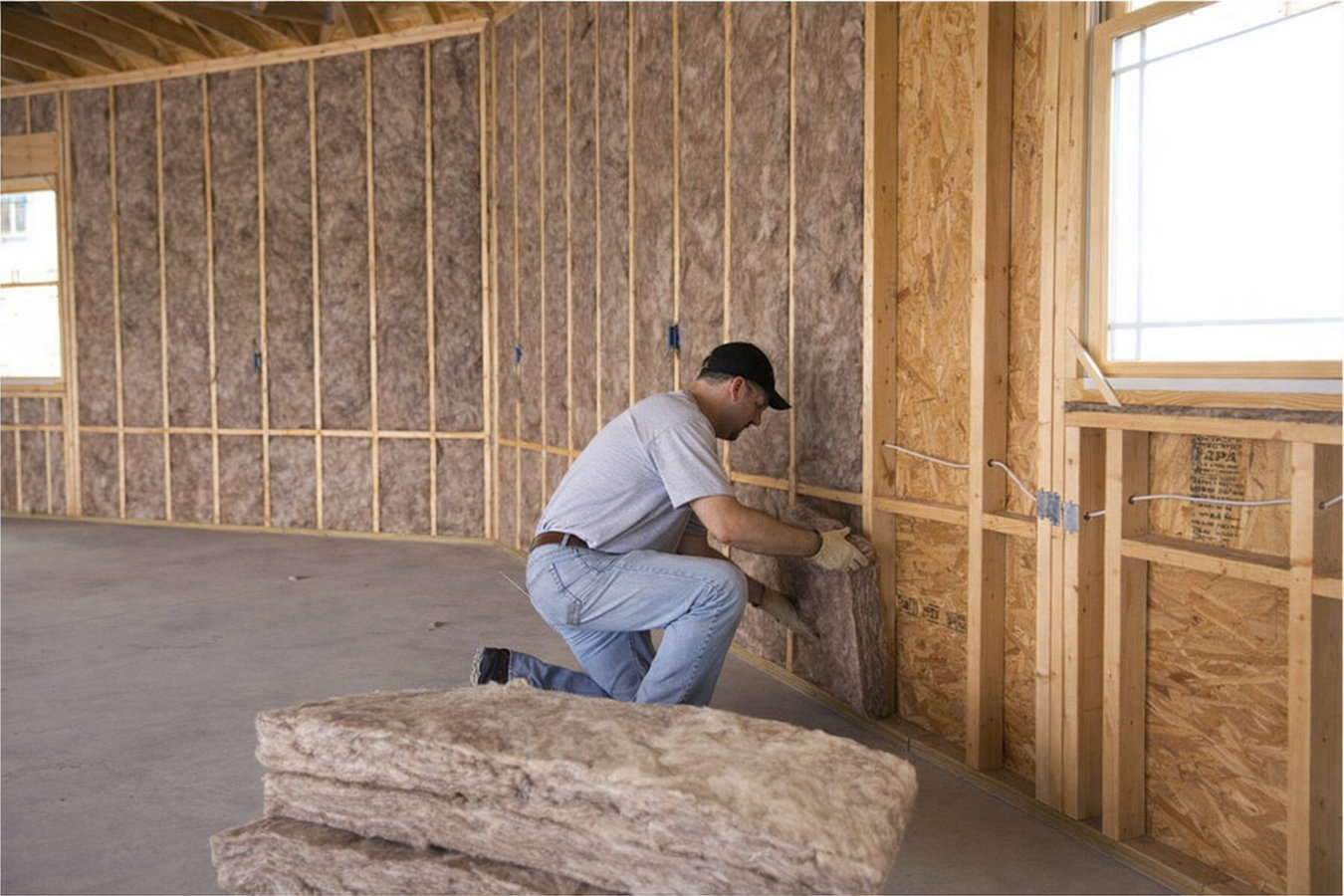
Home insulation in Ashland covers the attic, crawl space, walls, and basement together - most assessments take 30 to 60 minutes, and we give you a written quote that prioritizes the work that will make the biggest difference for your specific home.
Heat moves through every surface it can find. In Ashland older homes, that usually means the attic is the biggest problem - heat rises, and an under-insulated attic lets it escape directly to the outside. But cold floors in winter almost always point to the crawl space, and drafty rooms in corners of the house can trace back to walls with little or no insulation. We look at everything together so you are not fixing one area while ignoring another that is just as bad.
If old or damaged insulation needs to come out first, we handle that too with our insulation removal service before new material goes in. For homes where gaps and air leaks are the real problem, pairing insulation with our retrofit insulation approach lets us improve coverage without tearing anything apart.
If your gas or electric bill climbs every November and stays high through March, your home is losing heat faster than your furnace can replace it. Ashland winters are long and cold, and an under-insulated home works the heating system harder than it should have to - which shows up on every monthly statement.
Ice dams form when heat escaping through an under-insulated attic warms the roof, melts snow, and then refreezes at the cold eaves. If you have seen thick icicles or ridges of ice building up along your gutters during Ashland winters, your attic insulation and air sealing both need attention.
Cold floors are one of the most reliable signs of an under-insulated crawl space or basement. In Ashland older housing stock, crawl spaces are frequently uninsulated or have insulation that has fallen down over the years, leaving nothing between the cold ground and your living space.
Homes built before modern energy codes were adopted were constructed with far less insulation than is recommended today. If you have never had an energy audit or insulation upgrade and your home is more than 40 years old, there is a strong chance that improving insulation would make a noticeable difference in comfort and cost.
A whole-home approach means we look at the attic, crawl space, walls, and basement before recommending anything. The attic almost always comes first - it is where the fastest payback is and where most Ashland homes are furthest below recommended levels. Once that is done, the crawl space is often the next priority, especially in homes where cold floors and occasional frozen pipes have been ongoing problems. We pair every insulation job with air sealing around fixtures, plumbing penetrations, and the attic hatch - because insulation alone cannot stop air movement through gaps.
If a room-by-room approach makes more sense for your budget, we can start small and expand. Homeowners who need to replace worn-out or damaged material first can combine this with our insulation removal service. For older homes where access to walls or tight spaces is limited, our retrofit insulation methods let us improve coverage without opening up finished surfaces.
The highest-impact upgrade for most Ashland homes - blown-in or batt options depending on access and current conditions.
Addresses cold floors and energy loss in homes with crawl space foundations, often combined with moisture control.
Dense-pack blown-in or spray foam for exterior wall cavities in finished homes, without requiring a full renovation.
Insulates the rim joist, foundation walls, and floor system to reduce heat loss and cold-floor complaints on the first level.
Ashland sits in north-central Ohio in Department of Energy Climate Zone 5 - one of the zones with the highest recommended attic insulation levels in the country. Homes built before the 1970s were constructed with little or no wall insulation and minimal attic coverage by today standards. Many of Ashland two-story Victorian and Craftsman homes near downtown, and the ranch homes that fill the outer neighborhoods, fall well short of those recommended levels. Homeowners in Ashland, OH and surrounding communities are paying more to heat their homes every winter than they need to. The freeze-thaw cycle that hits north-central Ohio every winter is also a direct cause of ice dams and roof damage - both of which trace back to heat escaping through an under-insulated attic.
Crawl space construction is common in Ashland older neighborhoods, and an uninsulated crawl space lets cold air sit directly under your living areas. This shows up as cold floors and higher heating bills - two of the most common complaints we hear from homeowners in Bellville, OH and the surrounding area. The U.S. Department of Energy recommends addressing both the attic and the crawl space together for the best results. You can read their insulation guide at energy.gov.
We reply within one business day. We will ask a few short questions about your home and schedule a free in-home assessment. No obligation and no sales pressure.
We inspect the attic, crawl space, and any other areas of concern - usually 30 to 60 minutes. You receive a written estimate that explains what will be done, where, and with what materials.
Most attic jobs are completed in a single day. Larger projects covering multiple areas may take two days. You can stay in your home the entire time - we work in the attic and crawl space, not in your living areas.
Before leaving, we walk you through what was done and provide written documentation of materials and coverage. You will need this for federal tax credit and utility rebate applications.
Written quote included. No obligation. We reply within one business day.
(567) 899-0137We inspect every area where heat can escape before recommending anything. That means you get a complete picture - not a quote built around the one area we specialize in.
We have been working in Ashland and surrounding Ohio communities since 2019. We know the older housing types, the crawl space conditions, and the moisture issues that are specific to north-central Ohio homes.
Gaps around fixtures, plumbing penetrations, and the attic hatch let conditioned air escape even through thick insulation. We seal those gaps first - a step many contractors skip - because the combination is what actually delivers results.
Federal tax credits and Ohio utility rebates can meaningfully reduce your cost, but only if the work is documented correctly. We provide written records of materials and coverage so you are not scrambling at tax time.
The combination of a thorough assessment, air sealing before installation, and proper documentation is what separates a home insulation job that actually performs from one that just checks a box. That is the standard we hold to on every project.
For building science credentials in the insulation industry, see the Building Performance Institute (BPI).
For Climate Zone 5 insulation recommendations, visit the U.S. Department of Energy insulation guide. Federal tax credit details are available at the IRS Energy Efficient Home Improvement Credit page.
Remove old, damaged, or contaminated insulation before new material goes in - handled cleanly and completely.
Learn MoreAdd insulation to existing finished walls and difficult-to-access spaces without opening up your home.
Learn MoreAshland winters come fast. Get a free whole-home assessment now and know exactly what your house needs before the cold sets in.