
Loading...
Serving Ashland, OH and surrounding areas. (567) 899-0137
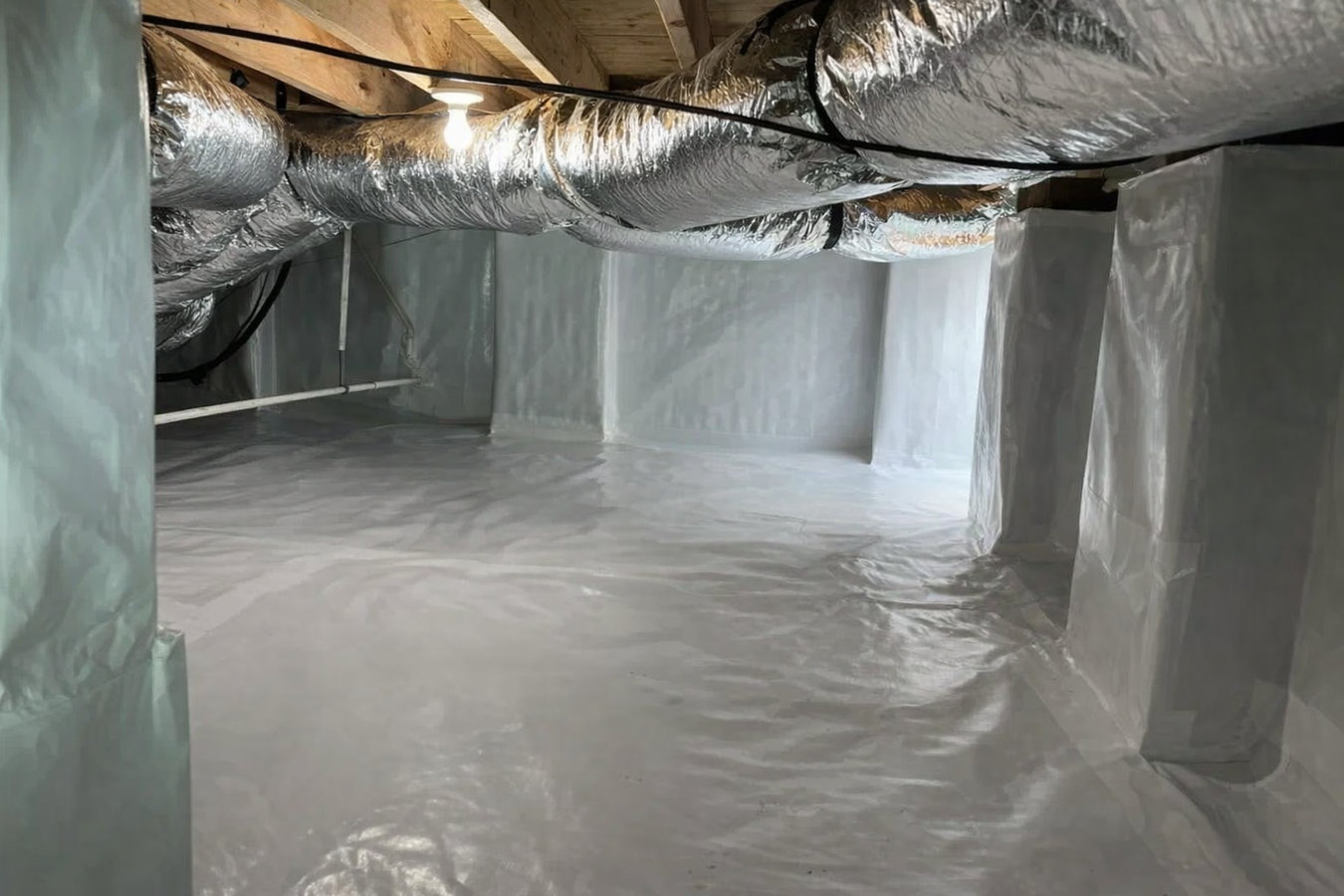
Ground moisture is rising through your crawl space right now. We install vapor barriers that stop it before it reaches your floors, framing, and air.
Crawl space vapor barrier installation in Ashland involves laying heavy-duty polyethylene sheeting across your entire crawl space floor and up the foundation walls, sealing the seams tightly so ground moisture cannot rise into your home. Most jobs take one day and require no changes to your living areas.
The crawl space under your home is in direct contact with the ground, and that ground is wet for much of the year in north-central Ohio. Without a barrier, moisture evaporates upward into the air beneath your floors, where it soaks into wood framing, damages insulation, and creates the conditions for mold and rot. Many Ashland homeowners first notice the problem as cold floors in winter or a musty smell that appears every spring.
A vapor barrier is often paired with crawl space insulation for a more complete solution. Together they address both moisture intrusion and heat loss from below, which are the two most common crawl space problems in homes built before 1980.
A damp, earthy odor that appears in late winter or early spring - especially near the floors - is a strong sign moisture is rising from below. In Ashland, this pattern follows snowmelt season when saturated ground pushes moisture upward. The smell typically gets worse each year if nothing is done.
Crawl space moisture soaks into wood framing and the subfloor above it. Floors that feel unusually cold in winter, or spots that feel slightly springy when you walk on them, indicate the wood underneath may already be absorbing moisture. This is especially common in older Ashland homes with no prior moisture protection.
Water pooling on the crawl space floor, wet insulation hanging down, or condensation on pipes and beams are not normal conditions - even in a wet climate like north-central Ohio. These are signs of an active moisture problem that will get worse without intervention.
An unprotected crawl space lets cold, damp air circulate freely under your home, forcing your heating system to work harder. If your energy bills have crept up over the years without an obvious explanation, the crawl space is worth investigating as one of the first places to check.
Our core service is a full crawl space vapor barrier installation. We cover every inch of the crawl space floor with heavy-duty polyethylene sheeting, overlap and tape all seams, and secure the edges to your foundation walls so there are no gaps for moisture to sneak through. For homes with a history of standing water or very high humidity, we also offer full crawl space encapsulation, which adds wall sealing and a dehumidifier to the barrier installation. This is a more complete solution that many Ashland homeowners with older, wetter crawl spaces find they need.
We also handle barrier repair and replacement for homes that already have plastic down but need it updated. If your current sheeting is torn, incomplete, or not properly sealed at the seams, a repair or full replacement will restore its effectiveness. All of our crawl space work is grounded in the same moisture-first approach we bring to vapor barrier installation throughout the home - and we often pair crawl space work with crawl space insulation for homeowners who want to address both heat loss and moisture in a single visit.
Best for homes where the primary need is blocking ground moisture from rising into the floor framing.
Best for homes with persistent moisture problems or standing water, where wall sealing and a dehumidifier are also needed.
Best for homes with an existing barrier that is torn, incomplete, or no longer sealed properly at the seams.
Ashland sits in north-central Ohio on clay-heavy glacial soil that holds water near the surface long after rain or snowmelt. That means the ground under your crawl space stays wet for extended periods, actively pushing moisture upward throughout much of the year. Add in average annual precipitation around 38 inches and significant snowmelt from February through April, and Ashland homeowners face more sustained crawl space moisture pressure than homeowners in drier parts of the country. It is not just a springtime problem - it is a year-round condition that a vapor barrier is specifically designed to handle. Residents in Ashland and the surrounding area know this better than most.
Much of the housing stock here dates from the mid-20th century or earlier, when crawl spaces were routinely left with bare dirt floors and no moisture protection. If your home was built before the 1980s, there is a good chance it has never had a proper vapor barrier - or has one that is old, torn, or only partially covering the ground. This is the single most common situation we encounter across Ashland and nearby communities like Loudonville. Getting a barrier installed is one of the most direct ways to protect the wood framing that holds your home up, and one of the most cost-effective improvements you can make to a pre-1980 house. The U.S. Department of Energy recognizes crawl space moisture control as a key step in improving home energy performance.
We ask a few quick questions about your home and crawl space. You will hear back within one business day to schedule your on-site visit.
We physically enter the crawl space to check its size, access, current moisture conditions, and whether any prep work is needed before installation. Most visits take 30-60 minutes.
The crew clears any debris, lays the polyethylene sheeting across the entire floor with properly overlapped seams, tapes them tight, and secures the edges to your foundation walls. Most jobs finish in one day.
Before leaving, we review the finished work with you - by photos inside the space or by looking in together - and let you know about any follow-up steps like ventilation or a dehumidifier.
Free estimate. No pressure. We reply within one business day.
(567) 899-0137A large share of the homes we work on in Ashland were built before modern moisture-control standards existed. We know what bare-dirt crawl spaces in older construction look like, what condition they are usually in, and how to address them correctly.
We use heavy-duty polyethylene sheeting - not the thin, flimsy plastic you can buy at a hardware store. Quality material matters in north-central Ohio crawl spaces, where seasonal moisture pressure is real and consistent.
Every installation follows Insulation Contractors Association of America (ICAA) best practices for seam overlap, taping, and wall coverage. You can verify the standard at insulate.org.
We walk your crawl space before quoting, so we know what we are getting into. If we find something unexpected on installation day - old wet insulation, a drainage issue - we tell you before we proceed, not after.
We have been working in Ashland and north-central Ohio long enough to know exactly what crawl spaces here look like. These proof points are not marketing language - they reflect how we actually do the work, and you can verify them when you call.
Full vapor barrier service covering crawl spaces, basements, and other areas where ground moisture enters the home.
Learn MoreInsulate the walls and floor of your crawl space to reduce heat loss alongside your new vapor barrier.
Learn MoreAshland winters bring snowmelt and saturated soil - get a free estimate from Ashland Insulation now and have your barrier in place before spring.